Buy ilpartitodeisardi.eu ?
We are moving the project
ilpartitodeisardi.eu .
Are you interested in purchasing the domain
ilpartitodeisardi.eu ?
domain@kv-gmbh.de · 0541-91531010
Buy ilpartitodeisardi.eu ?
What are similarity ratios?
Similarity ratios are ratios that compare the corresponding sides of two similar figures. They help us understand the relationship between the sides of similar shapes. The ratio of corresponding sides in similar figures is always the same, which means that if you know the ratio of one pair of sides, you can use it to find the ratio of other pairs of sides. Similarity ratios are important in geometry and are used to solve problems involving similar figures. **
What are angle ratios?
Angle ratios are the ratios of the lengths of the sides of a right-angled triangle. In a right-angled triangle, the ratio of the length of the side opposite an angle to the length of the hypotenuse is called the sine of the angle. The ratio of the length of the side adjacent to an angle to the length of the hypotenuse is called the cosine of the angle. And the ratio of the length of the side opposite an angle to the length of the side adjacent to the angle is called the tangent of the angle. These ratios are fundamental in trigonometry and are used to solve for unknown sides and angles in right-angled triangles. **

Similar search terms for Ratios
Top-Angebote
Products related to Ratios:
-
Les Jardins LED path light Tradition Sensor Corten 90cm Tradition, dimmable, Brown / rust, Aluminium, Modern, outdoor solar lightsThe LED path light Tradition made of aluminum shows a modern cuboid shape and rust-brown corten steel finish. It can be operated autonomously thanks to equipment with solar module, rechargeable battery and motion sensor.- equipped with dimming function- operating time when fully charged: 5 h to 200 h (depending on light output)- protection class: IP66- alternatively rechargeable via USB connection- via ground spike (included) or permanently installable398,43 £*Shipping: 4,99 £Secure redirect to the provider
-
Novica Handmade Tradition Of The Heart Basalt BowlPrepare herbs, spices and sauces the way our ancestors did--with handmade stone tools. The Comonfort Group presents this heart-shaped basalt bowl, crafted by hand in a labor-intensive process.132,98 $*Shipping: 0,00 $Secure redirect to the provider
-
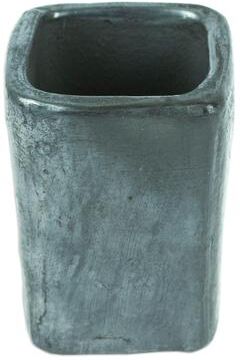
Novida Novica Handmade Festive Tradition Barro Negro Shot GlassMexico's Fernando and Magali Pedro craft a unique creation from traditional barro negro ceramic. After a long and detailed process, this high-quality shot glass is ready to be that elegant item you need for your parties.28,48 $*Shipping: 0,00 $Secure redirect to the provider



-
What are circle ratios?
Circle ratios, also known as trigonometric ratios, are mathematical relationships between the sides and angles of a right-angled triangle. The three main circle ratios are sine, cosine, and tangent, which are defined as the ratio of the lengths of the sides of the triangle. These ratios are used to solve for unknown side lengths or angles in a right-angled triangle and are fundamental concepts in trigonometry. The sine ratio is the ratio of the length of the side opposite an angle to the length of the hypotenuse, the cosine ratio is the ratio of the length of the side adjacent to an angle to the length of the hypotenuse, and the tangent ratio is the ratio of the length of the side opposite an angle to the length of the side adjacent to the angle. **
-
What are ratios and proportions?
Ratios are a way of comparing two quantities by division, often written as a fraction or with a colon. Proportions are equations that show that two ratios are equal. In other words, proportions are two equal ratios. Ratios and proportions are used in various real-life situations, such as cooking, finance, and geometry, to compare and scale quantities. **
-
What are ratios in chemistry?
Ratios in chemistry refer to the quantitative relationship between the amounts of substances involved in a chemical reaction or process. These ratios can be expressed in various ways, such as mole ratios, mass ratios, or volume ratios. Ratios are important in stoichiometry, which is the calculation of the quantities of reactants and products in chemical reactions. By understanding and using ratios in chemistry, scientists can accurately predict and control the outcomes of chemical reactions. **
-
How do you calculate profitability ratios?
Profitability ratios are calculated by comparing a company's profits to its revenue, assets, equity, or other financial metrics. The most common profitability ratios include gross profit margin, operating profit margin, net profit margin, return on assets, and return on equity. These ratios are calculated by dividing the relevant profit figure by the corresponding financial metric. For example, the net profit margin is calculated by dividing net income by revenue and multiplying by 100 to get a percentage. These ratios help investors and analysts assess a company's ability to generate profits relative to its financial resources. **


What are similarity ratios in geometry?
Similarity ratios in geometry are used to compare the sizes of corresponding sides of similar figures. When two figures are similar, their corresponding sides are in proportion to each other, and the similarity ratio is the ratio of the lengths of corresponding sides. For example, if two triangles are similar, the ratio of the lengths of their corresponding sides will be the same. This allows us to use the similarity ratio to find missing side lengths or to determine the scale factor between the two figures. **
How do I determine base ratios?
To determine base ratios, you need to first identify the different components or elements that make up the base. Then, you need to calculate the ratio of each component to the total base. For example, if the base is made up of three components A, B, and C, you would calculate the ratio of A to the total base, the ratio of B to the total base, and the ratio of C to the total base. This will give you the base ratios for each component. These ratios can be used to analyze the composition and distribution of the base components. **
Top-Angebote
Products related to Ratios:
-
RLF Home Tradition Provance Valance"Fits Windows up to 50""W. Use multiples for Wider Windows. Decorator's quality fabrics. Fully lined with Poly/Cotton Ivory lining. Use a 2-1/2"" Continental Rod, a regular 3/4"" Curtain rod, Tension rod or Decorative pole no more than 1-3/8"" Diameter."64,49 $*Shipping: 0,00 $Secure redirect to the provider
-
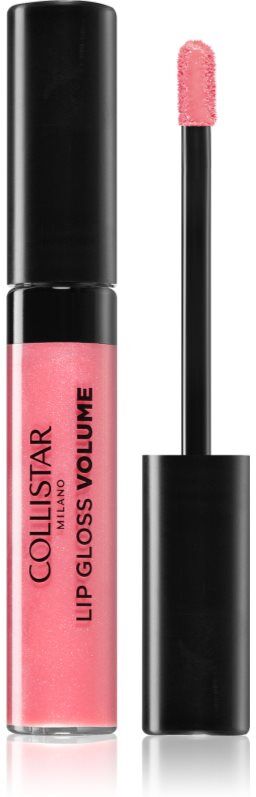
Collistar Lip Gloss Volume plumping lip gloss shade 180 Sardinian Coral 7 mlCollistar Lip Gloss Volume, 7 ml, Lip Glosses for Women, Lips as smooth as glass and as reflective as a mirror? The Collistar Lip Gloss Volume lip gloss can turn this dream into reality. It envelops the lips in a high-gloss formula, smoothing and evening out their surface to mask any lines or wrinkles while giving your lips long-lasting comfort. It promotes their soft appearance, preventing visible dryness that can interfere with your perfect makeup look. In no time at all, it helps you achieve beautifully glossy, luscious lips, making them the centre of attention and irresistibly kissable. Characteristics: gives lips more volume moisturises and softens lips smooths fine lines on the lips long-lasting effect adds subtle colour to lips Ingredients: vitamin E – nourishes, provides antioxidant protection against premature ageing and damage caused by free radicals, helps smooth wrinkles and restore skin firmness and elasticity How to use: Apply an even layer to the lips with an applicator.10,20 £*Shipping: 3,99 £Secure redirect to the provider
-
Les Jardins LED path light Tradition Sensor Corten 90cm Tradition, dimmable, Brown / rust, Aluminium, Modern, outdoor solar lightsThe LED path light Tradition made of aluminum shows a modern cuboid shape and rust-brown corten steel finish. It can be operated autonomously thanks to equipment with solar module, rechargeable battery and motion sensor.- equipped with dimming function- operating time when fully charged: 5 h to 200 h (depending on light output)- protection class: IP66- alternatively rechargeable via USB connection- via ground spike (included) or permanently installable398,43 £*Shipping: 4,99 £Secure redirect to the provider
-
Novica Handmade Tradition Of The Heart Basalt BowlPrepare herbs, spices and sauces the way our ancestors did--with handmade stone tools. The Comonfort Group presents this heart-shaped basalt bowl, crafted by hand in a labor-intensive process.132,98 $*Shipping: 0,00 $Secure redirect to the provider
-
What are similarity ratios?
Similarity ratios are ratios that compare the corresponding sides of two similar figures. They help us understand the relationship between the sides of similar shapes. The ratio of corresponding sides in similar figures is always the same, which means that if you know the ratio of one pair of sides, you can use it to find the ratio of other pairs of sides. Similarity ratios are important in geometry and are used to solve problems involving similar figures. **
-
What are angle ratios?
Angle ratios are the ratios of the lengths of the sides of a right-angled triangle. In a right-angled triangle, the ratio of the length of the side opposite an angle to the length of the hypotenuse is called the sine of the angle. The ratio of the length of the side adjacent to an angle to the length of the hypotenuse is called the cosine of the angle. And the ratio of the length of the side opposite an angle to the length of the side adjacent to the angle is called the tangent of the angle. These ratios are fundamental in trigonometry and are used to solve for unknown sides and angles in right-angled triangles. **
-
What are circle ratios?
Circle ratios, also known as trigonometric ratios, are mathematical relationships between the sides and angles of a right-angled triangle. The three main circle ratios are sine, cosine, and tangent, which are defined as the ratio of the lengths of the sides of the triangle. These ratios are used to solve for unknown side lengths or angles in a right-angled triangle and are fundamental concepts in trigonometry. The sine ratio is the ratio of the length of the side opposite an angle to the length of the hypotenuse, the cosine ratio is the ratio of the length of the side adjacent to an angle to the length of the hypotenuse, and the tangent ratio is the ratio of the length of the side opposite an angle to the length of the side adjacent to the angle. **
-
What are ratios and proportions?
Ratios are a way of comparing two quantities by division, often written as a fraction or with a colon. Proportions are equations that show that two ratios are equal. In other words, proportions are two equal ratios. Ratios and proportions are used in various real-life situations, such as cooking, finance, and geometry, to compare and scale quantities. **
Similar search terms for Ratios
-
Novida Novica Handmade Festive Tradition Barro Negro Shot GlassMexico's Fernando and Magali Pedro craft a unique creation from traditional barro negro ceramic. After a long and detailed process, this high-quality shot glass is ready to be that elegant item you need for your parties.28,48 $*Shipping: 0,00 $Secure redirect to the provider
-
Kid's Desert Badge Tradition T-Shirt in Smoked Pearl, Size: Small by AriatA mini version of Dad's favorite tee—he'll want to throw this one on more days than not. Soft yet durable, it can withstand hard play and frequent washes. Kid's Desert Badge Tradition T-Shirt in Smoked Pearl, Size: Small by Ariat22,95 $*Shipping: 0,00 $Secure redirect to the provider
-
What are ratios in chemistry?
Ratios in chemistry refer to the quantitative relationship between the amounts of substances involved in a chemical reaction or process. These ratios can be expressed in various ways, such as mole ratios, mass ratios, or volume ratios. Ratios are important in stoichiometry, which is the calculation of the quantities of reactants and products in chemical reactions. By understanding and using ratios in chemistry, scientists can accurately predict and control the outcomes of chemical reactions. **
-
How do you calculate profitability ratios?
Profitability ratios are calculated by comparing a company's profits to its revenue, assets, equity, or other financial metrics. The most common profitability ratios include gross profit margin, operating profit margin, net profit margin, return on assets, and return on equity. These ratios are calculated by dividing the relevant profit figure by the corresponding financial metric. For example, the net profit margin is calculated by dividing net income by revenue and multiplying by 100 to get a percentage. These ratios help investors and analysts assess a company's ability to generate profits relative to its financial resources. **
-
What are similarity ratios in geometry?
Similarity ratios in geometry are used to compare the sizes of corresponding sides of similar figures. When two figures are similar, their corresponding sides are in proportion to each other, and the similarity ratio is the ratio of the lengths of corresponding sides. For example, if two triangles are similar, the ratio of the lengths of their corresponding sides will be the same. This allows us to use the similarity ratio to find missing side lengths or to determine the scale factor between the two figures. **
-
How do I determine base ratios?
To determine base ratios, you need to first identify the different components or elements that make up the base. Then, you need to calculate the ratio of each component to the total base. For example, if the base is made up of three components A, B, and C, you would calculate the ratio of A to the total base, the ratio of B to the total base, and the ratio of C to the total base. This will give you the base ratios for each component. These ratios can be used to analyze the composition and distribution of the base components. **
* All prices are inclusive of VAT and, if applicable, plus shipping costs. The offer information is based on the details provided by the respective shop and is updated through automated processes. Real-time updates do not occur, so deviations can occur in individual cases. ** Note: Parts of this content were created by AI.